
Stockholm Square Excavations
Excavations in 3D by Dmitry Shutov
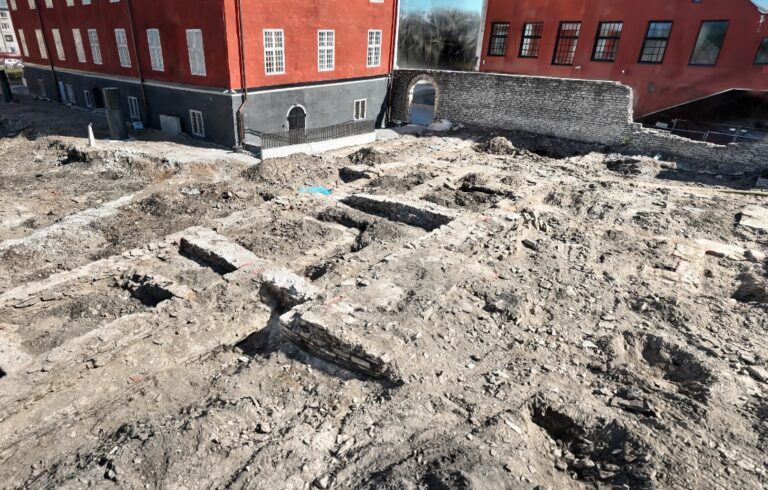
During the excavations, Dmitry Shutov created a 3D drone model of the site. The model was produced on 26 April 2023 to document the excavation trench and its exposed archaeological layers at what is now Stockholm Square, next to Narva Town Hall. Today, visitors can explore the excavation in 3D using Gaussian Splatting (3DGS) technology.
Excavations in 3D by Dmitry Shutov
During the excavations, Dmitry Shutov created a 3D drone model of the site. The model was produced on 26 April 2023 to document the excavation trench and its exposed archaeological layers at what is now Stockholm Square, next to Narva Town Hall. Today, visitors can explore the excavation in 3D using Gaussian Splatting (3DGS) technology.
Archaeological Excavations at Stockholm Square
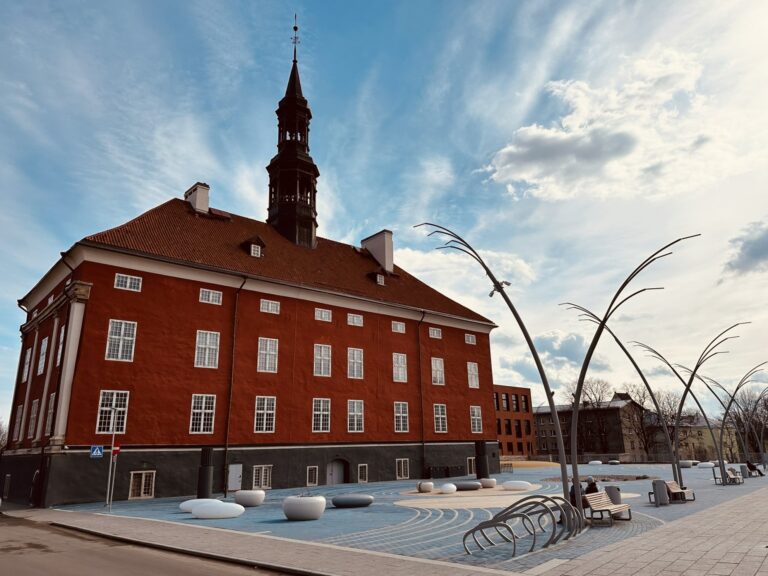 Photo: Narva City Department for Development and Economy
Before the construction of Stockholm Square, archaeological excavations were carried out on the site in 2022 and 2023. Part of the archaeological cultural layer that did not interfere with construction was preserved beneath the square for future generations.
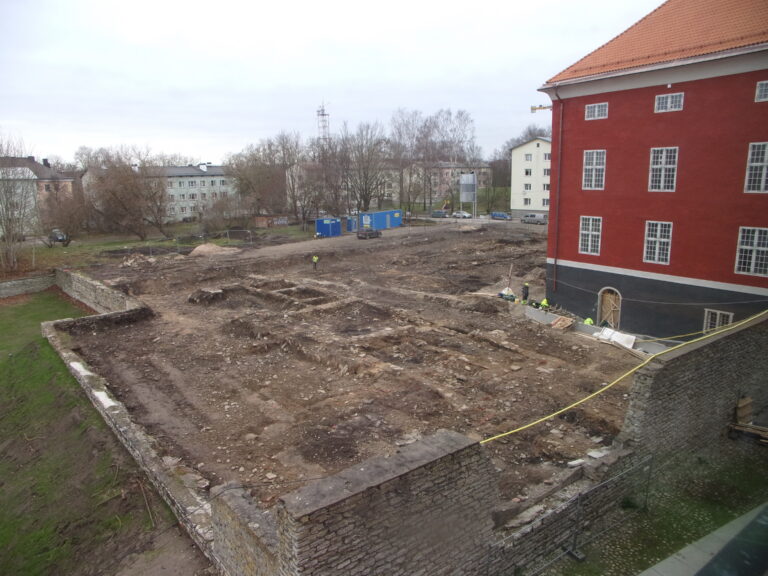 Photo: Sven Udam
Stockholm Square is a public square located to the west and south of Narva Town Hall, which was built during the Swedish period in the late 17th century. The square is bordered on the west by Helsinki Street. This historic north–south street is marked in the paving of the square. To the south, the square is bordered by a stone embankment constructed during the Soviet period. East of Stockholm Square lies Market Street (Turu Street), which historically led to the market square located beside the present-day Town Hall building.
During the Middle Ages, this area lay within the city walls, just east of the fortifications but away from the medieval town centre.
The site was crossed by a north–south street recorded on the 1684 town plan as Helsinger-Gasse. Its earlier name was Westerlanggasse. The present-day name, Helsinki Street, is a 20th-century adaptation of the historical name.
During the construction of the new Town Hall, the King of Sweden transferred a privately owned plot east of the Town Hall to the city council.
South of the Town Hall, at the former address Turu 12, stood the house of Pastor Scholbach. The building was destroyed in the Great Fire of 1659. Its new owners rebuilt the house, and notably, before the Second World War, the Republic of Estonia placed the building under heritage protection. Nearby stood a warehouse that housed a salt trading company during the 18th century.
Like the rest of Narva's Old Town, the buildings of what is now Stockholm Square were heavily damaged during the Soviet bombing raids of 1944. The ruins remained until the mid-1950s, when they were demolished. In the surrounding area, only the Town Hall was restored, later serving as the city's Pioneer Palace.
The most impressive archaeological remains are the foundation walls of a medieval and early modern residential quarter located south of the Town Hall, between Market Street and Helsinki Street.
Archaeological Finds
The excavations were carried out by Tõrvajõe OÜ under the direction of archaeologists Sven Udam and Ilja Davõdov. Among the discoveries were coins dating from the periods of the Livonian Order, Swedish rule, and the Russian Empire, as well as ceramics, tools, and everyday household items from the same eras.
One of the most remarkable finds was part of a stone axe dated to 3200–1800 BC, indicating that people were active in this area as long as 5,000 years ago.
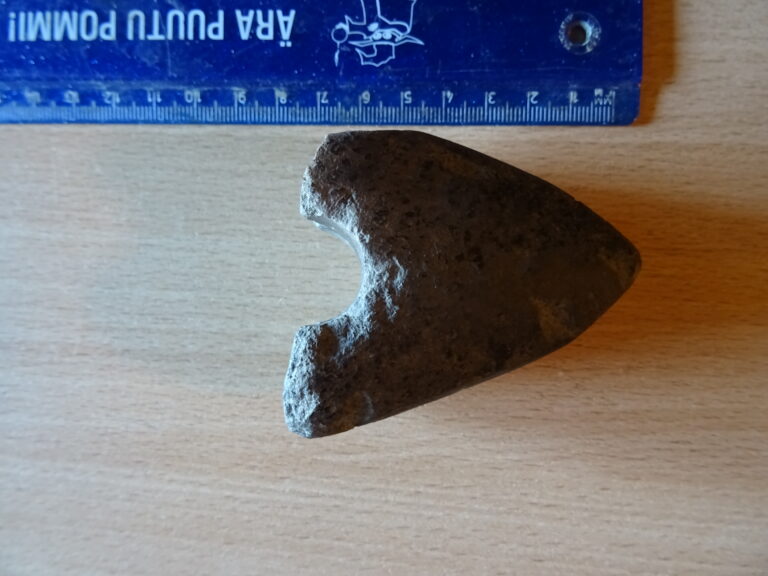 Photo: Sven Udam
South of the Town Hall, archaeologists also uncovered a shared burial of a mother and her three children. The grave is believed to date from a plague epidemic or a burial carried out during the siege of the city. Under normal circumstances, the deceased would have been buried in a cemetery.
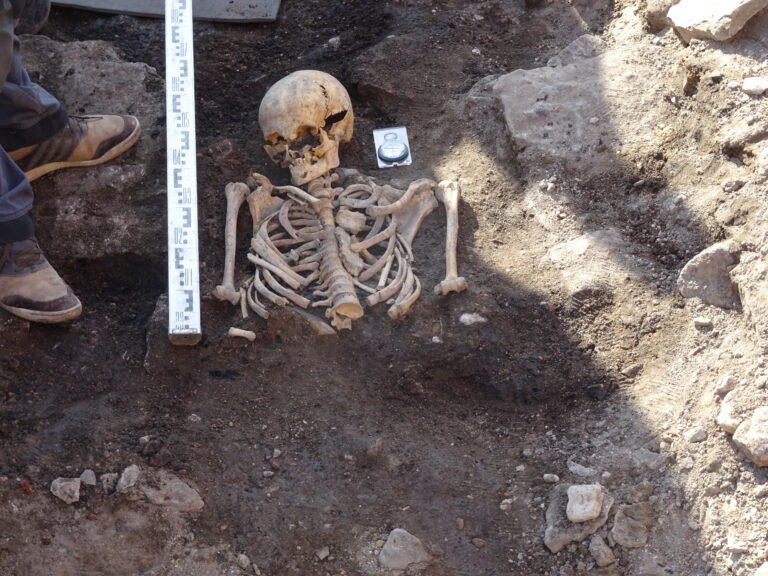 Photo: Sven Udam
Osteologist Martin Malve, who excavated and studied the burial, dated it to the 17th–18th century, although it may theoretically be up to a century older. From the same excavation trench, beneath the burial, archaeologists also discovered an arrowhead dating from the late 14th century to the first half of the 15th century.
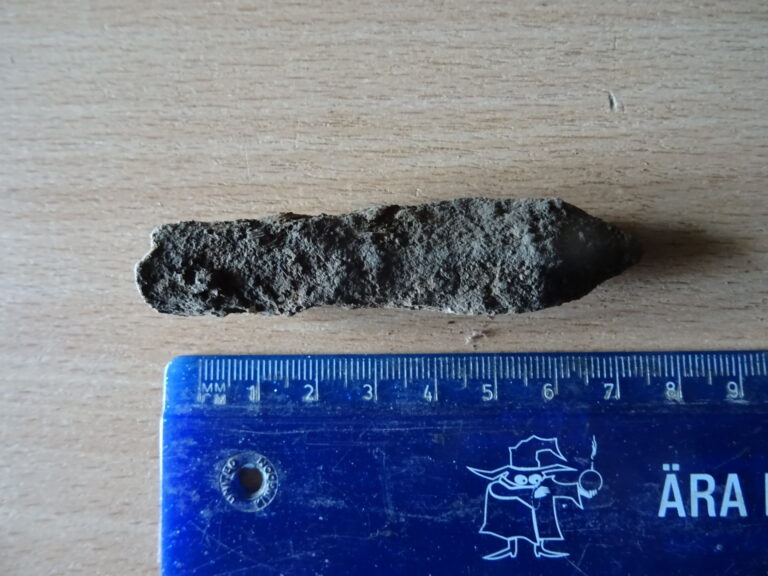 Photo: Sven Udam
Stockholm Square officially opened in 2024. Construction of the southern section of the square, along Market Street, is still ongoing.
Text by Sven Udam, Archaeologist